


Test Bank For Financial Statement Analysis & Valuation 4th Edition by Easton McAnally, Sommers Zhan
4.9
Financial Statement Analysis & Valuation 4th Edition Test Bank
View example
Details
Comments
Reviews

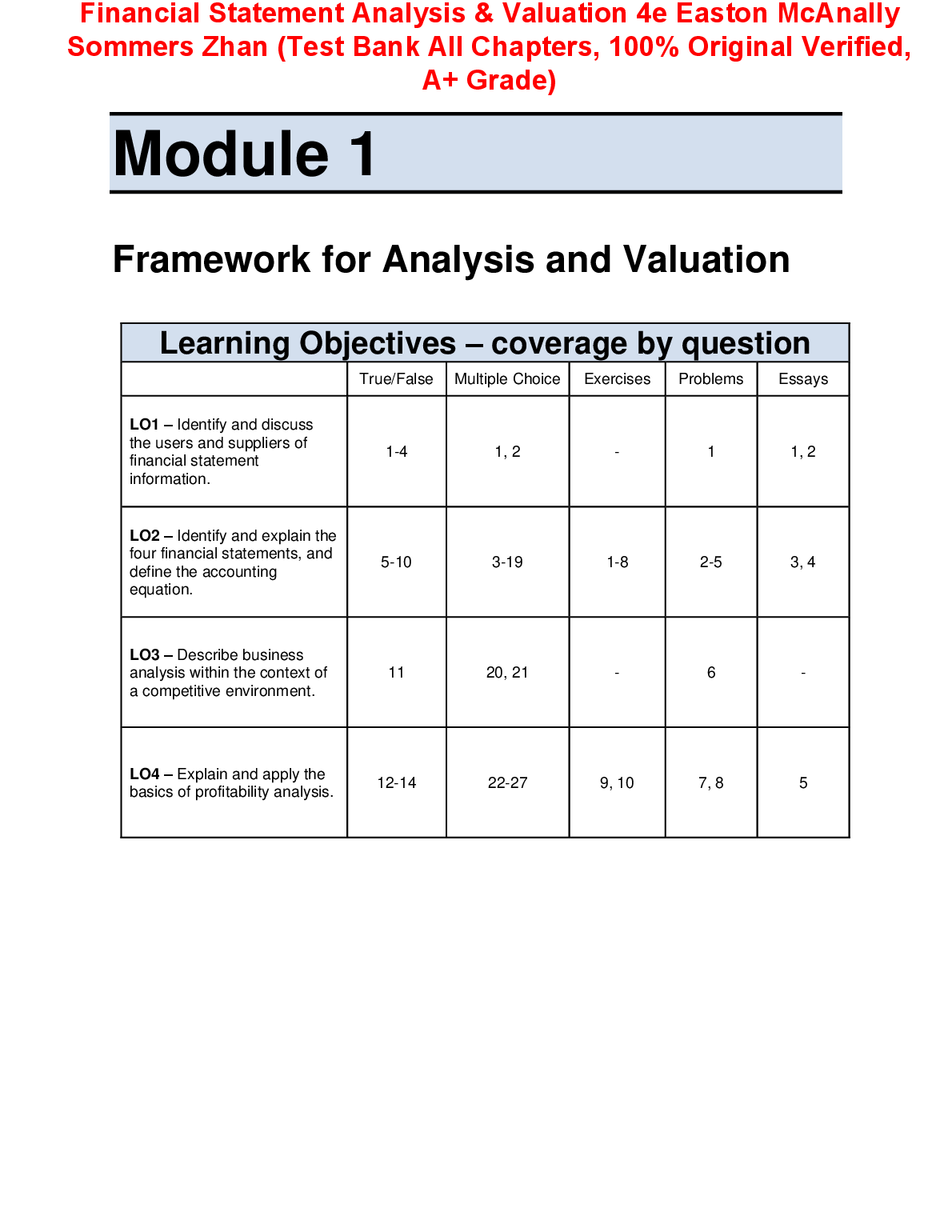
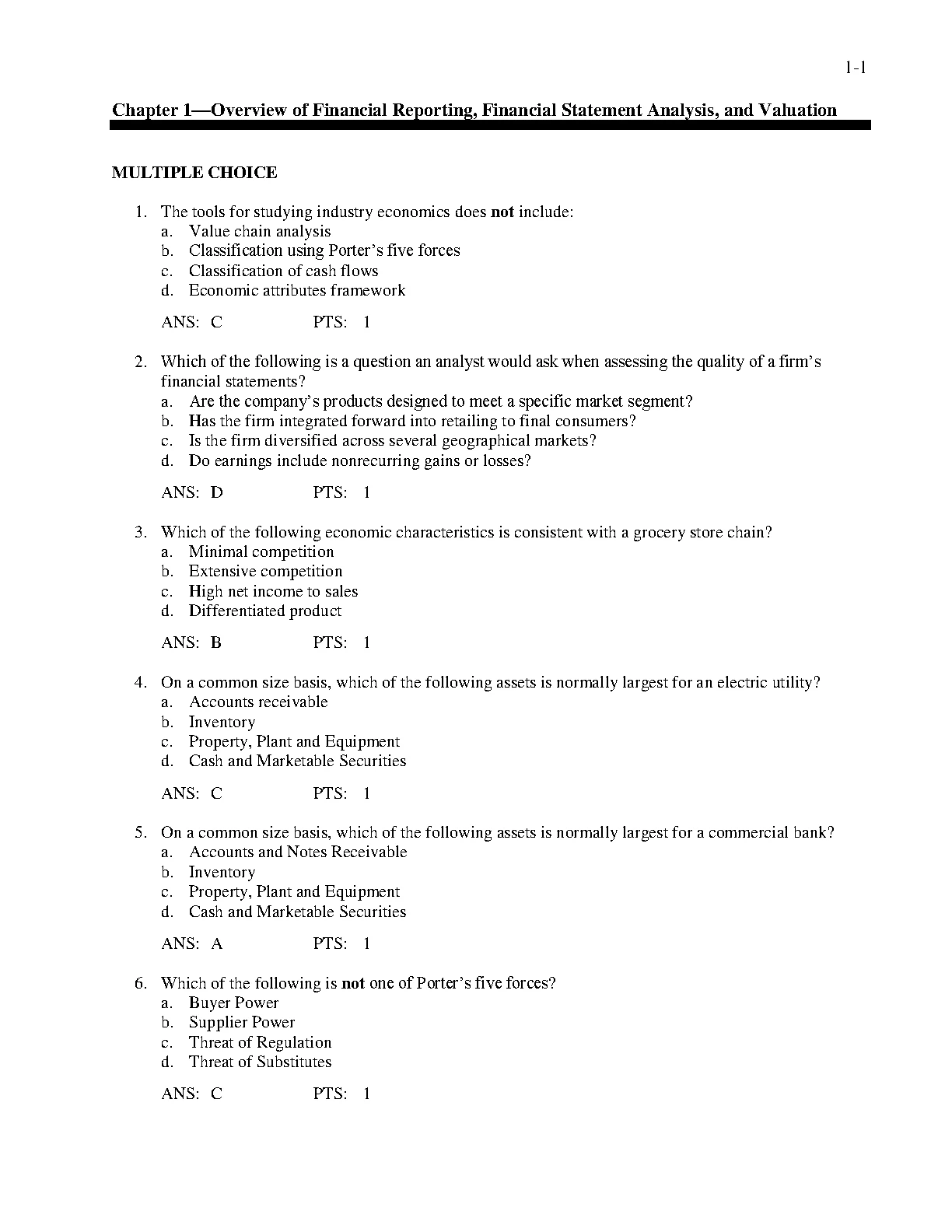
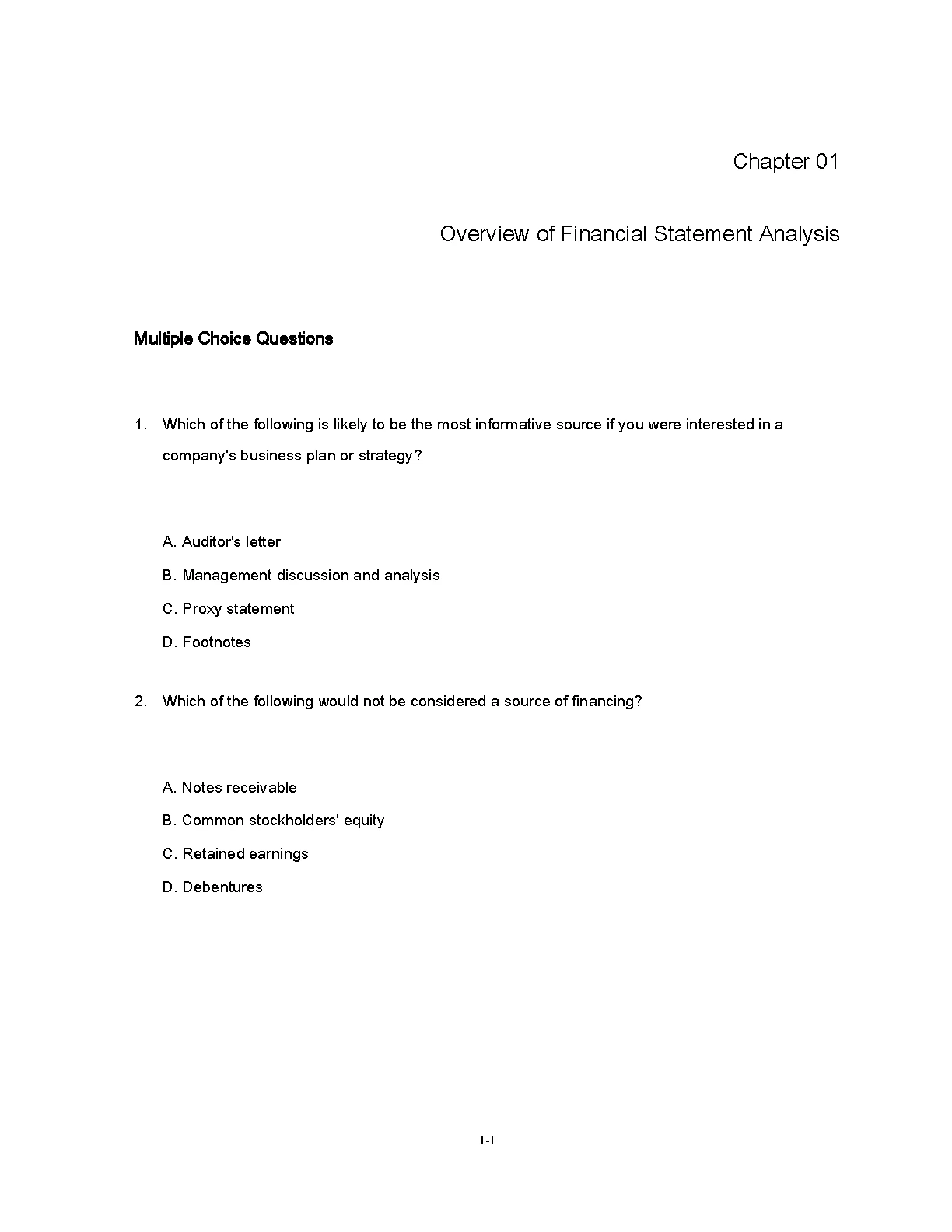
Test Bank for Financial Statement Analysis & Valuation, 4th Edition by Peter D. Easton, Mary Lea McAnally, Gregory A. Sommers, and Xiao-Jun Zhan is a supplementary educational resource designed to support students studying financial statement analysis and valuation.


The material can support coursework review, self-assessment, concept reinforcement, and examination preparation. It complements the study of financial reporting and the use of accounting information to evaluate business performance, forecast future results, and assess value.


Students can develop analytical skills by examining financial statements, interpreting profitability and risk measures, evaluating accounting information, and applying financial analysis techniques. The valuation component connects financial statement analysis with forecasting and the assessment of business and equity value.


Key Topics


  • Financial statement analysis

  • Financial reporting

  • Accounting information

  • Balance sheet analysis

  • Income statement analysis

  • Cash flow analysis

  • Accounting quality

  • Financial performance

  • Profitability analysis

  • Risk analysis

  • Earnings analysis

  • Financial ratio analysis

  • Comparative analysis

  • Financial forecasting

  • Forecasted financial statements

  • Business valuation

  • Equity valuation

  • Investment analysis

  • Fundamental analysis

  • Accounting-based valuation

  • Financial decision-making

  • Investor analysis

  • Business performance evaluation


Learning Objectives


  1. Explain the purpose of financial statement analysis.

  2. Describe how accounting information supports financial decisions.

  3. Analyze major financial statements.

  4. Evaluate the quality of accounting information.

  5. Interpret profitability and performance measures.

  6. Analyze financial and operating risk.

  7. Evaluate earnings information.

  8. Analyze cash flow information.

  9. Apply financial ratio analysis.

  10. Compare financial performance across periods.

  11. Assess the implications of accounting choices.

  12. Develop financial forecasts.

  13. Evaluate assumptions used in financial forecasting.

  14. Connect accounting information with expected future performance.

  15. Explain fundamental valuation principles.

  16. Apply financial information to business valuation.

  17. Analyze equity value using financial data.

  18. Evaluate alternative valuation approaches.

  19. Connect financial statement analysis with investment decisions.

  20. Apply financial analysis and valuation concepts to business situations.