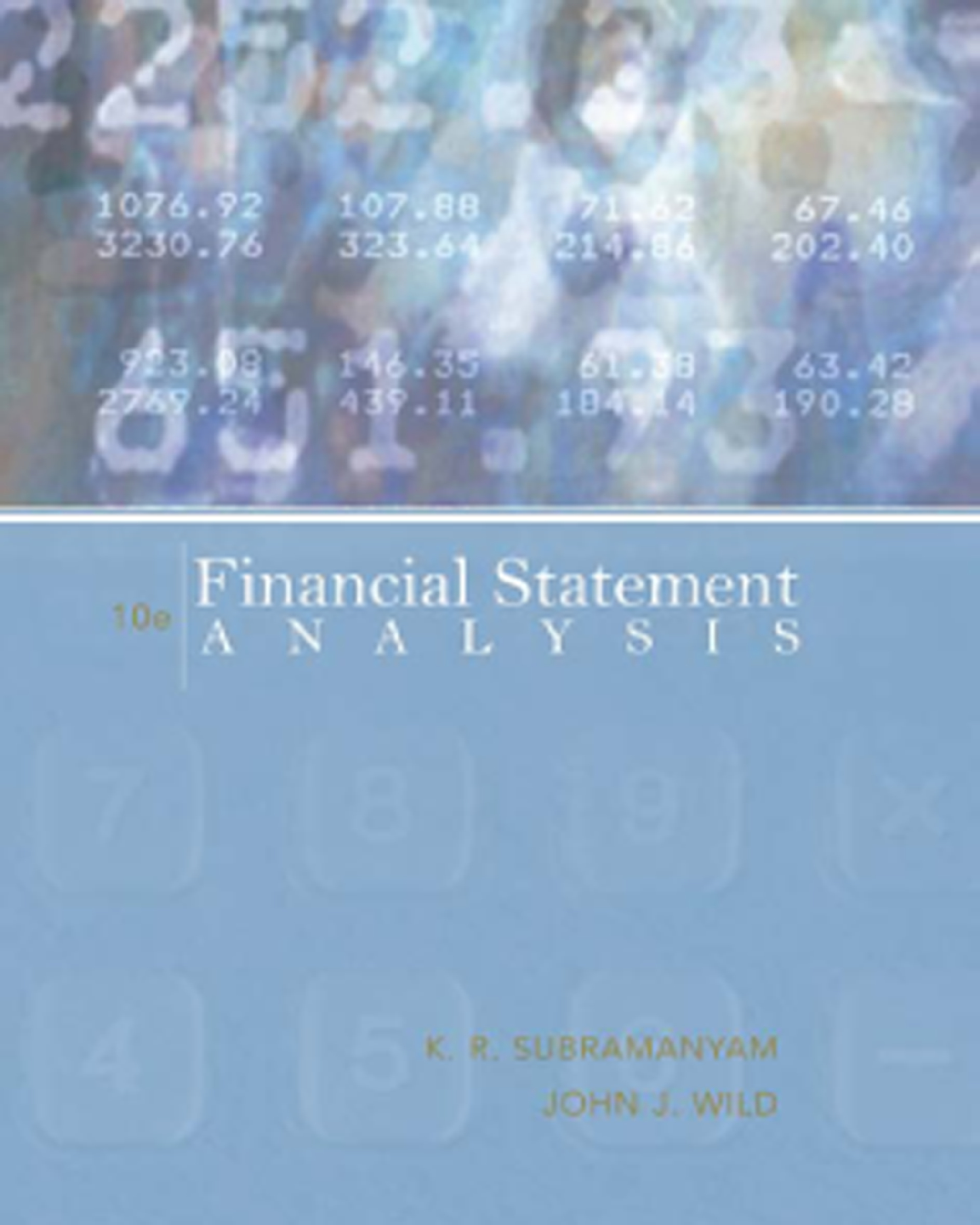
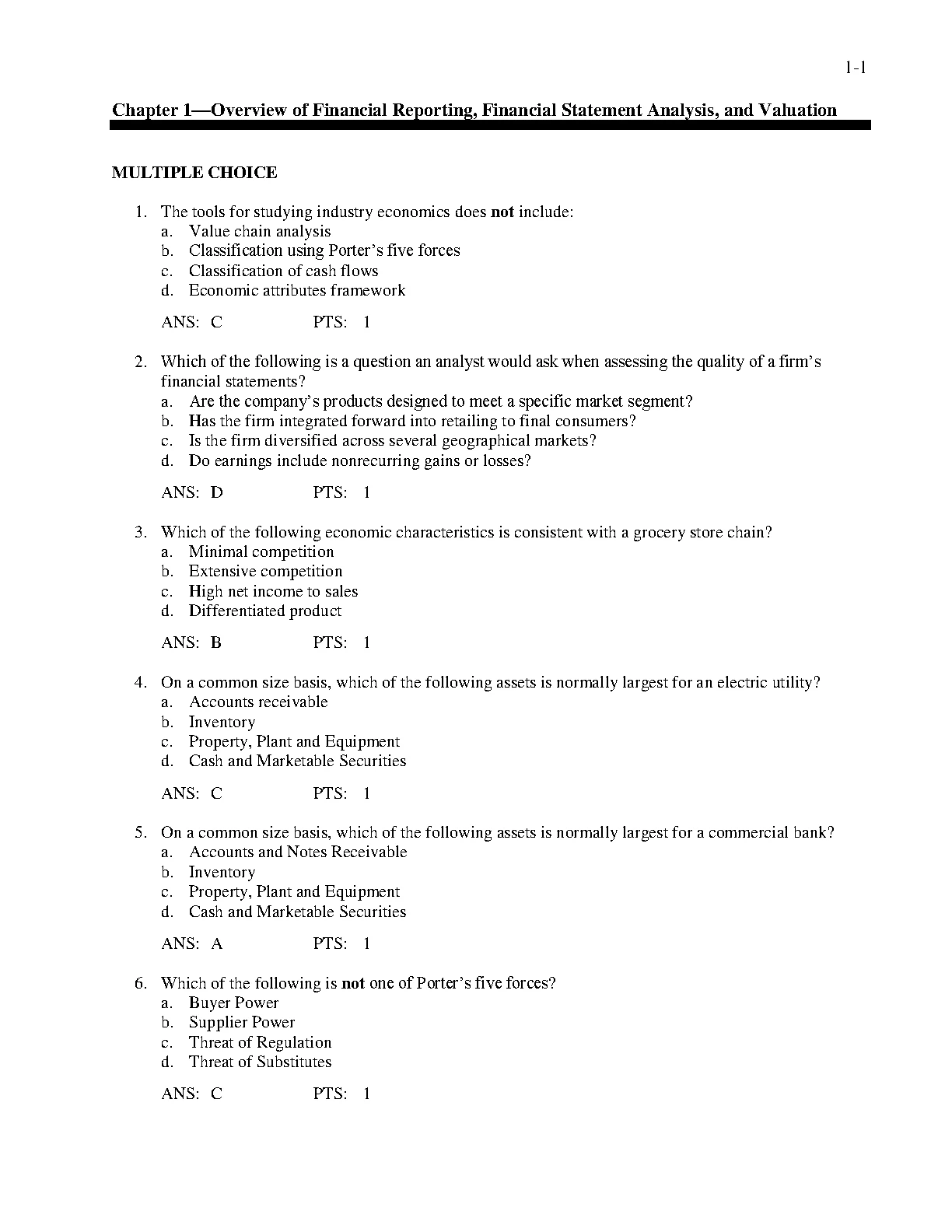
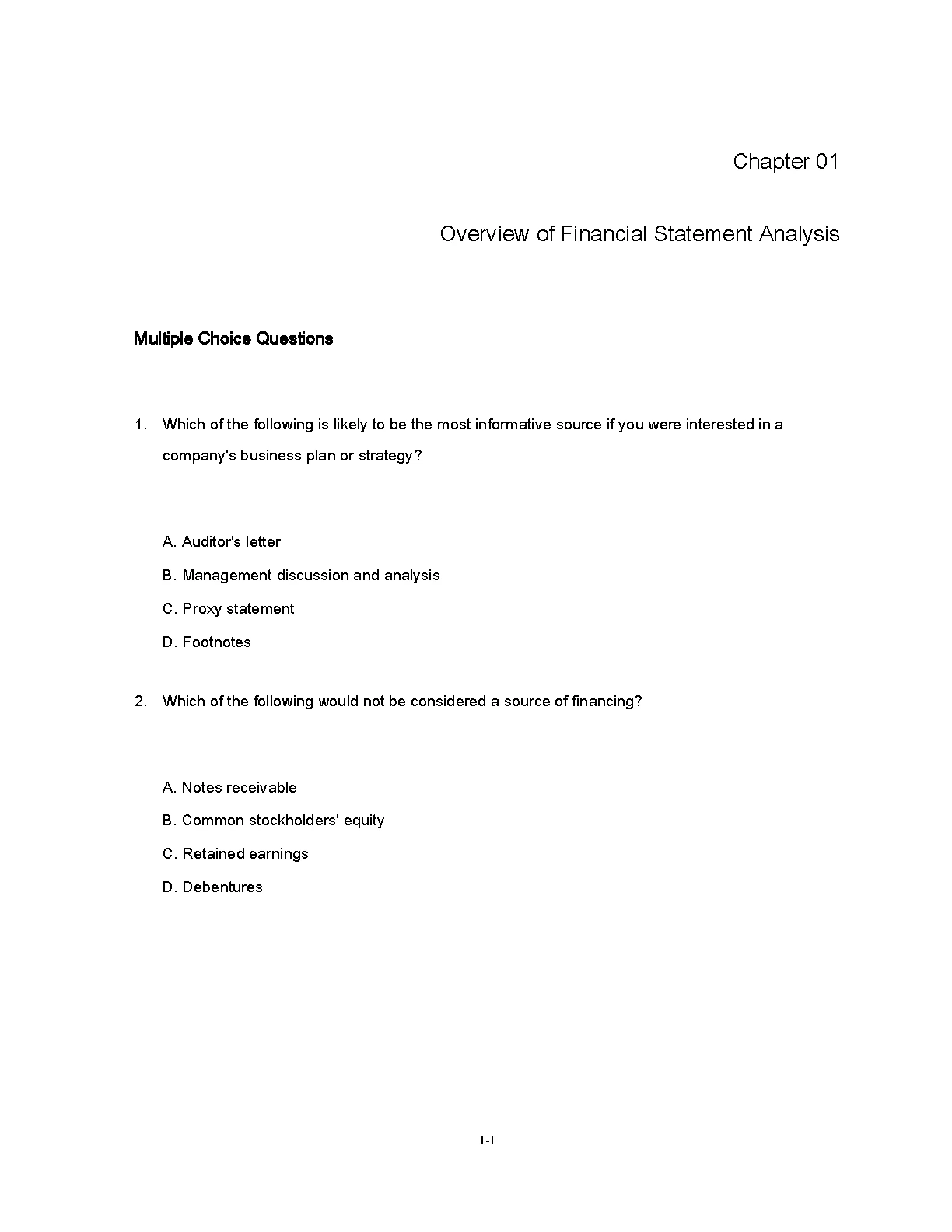
Test Bank for Financial Statement Analysis, 10th Edition by K. R. Subramanyam and John Wild is a supplementary educational resource designed to support students studying financial statement analysis, accounting, and finance. The material focuses on understanding and interpreting financial information for evaluating business performance and making informed financial decisions.
The resource can support coursework review, self-assessment, concept reinforcement, and examination preparation. It complements the study of financial reporting, financial statement interpretation, accounting analysis, ratio analysis, profitability, liquidity, solvency, cash flows, and other measures of financial performance.
Students can develop analytical skills by examining financial statements, identifying trends, evaluating accounting information, and assessing financial strengths and risks. The material also connects financial statement analysis with forecasting, valuation, and broader business decision-making.
Key Topics
Financial statement analysis
Financial reporting
Accounting analysis
Balance sheet analysis
Income statement analysis
Cash flow analysis
Financial ratio analysis
Comparative analysis
Trend analysis
Profitability analysis
Liquidity analysis
Solvency analysis
Financial risk
Earnings analysis
Accounting quality
Working capital
Operating performance
Financial forecasting
Business valuation
Investment analysis
Equity analysis
Financial decision-making
Learning Objectives
Explain the purpose and role of financial statement analysis.
Describe major financial reporting concepts.
Analyze balance sheet information.
Interpret income statement information.
Evaluate cash flow information.
Apply financial ratio analysis.
Perform comparative financial analysis.
Analyze financial trends.
Evaluate profitability and operating performance.
Assess liquidity and short-term financial position.
Analyze solvency and long-term financial risk.
Evaluate earnings and accounting information.
Analyze working capital and operating activities.
Assess the quality and reliability of financial information.
Develop and interpret financial forecasts.
Evaluate business performance using financial information.
Apply valuation concepts to financial analysis.
Use financial statement information in investment analysis.
Connect accounting information with financial decision-making.
Apply financial statement analysis techniques to business situations.


 Cookies!